
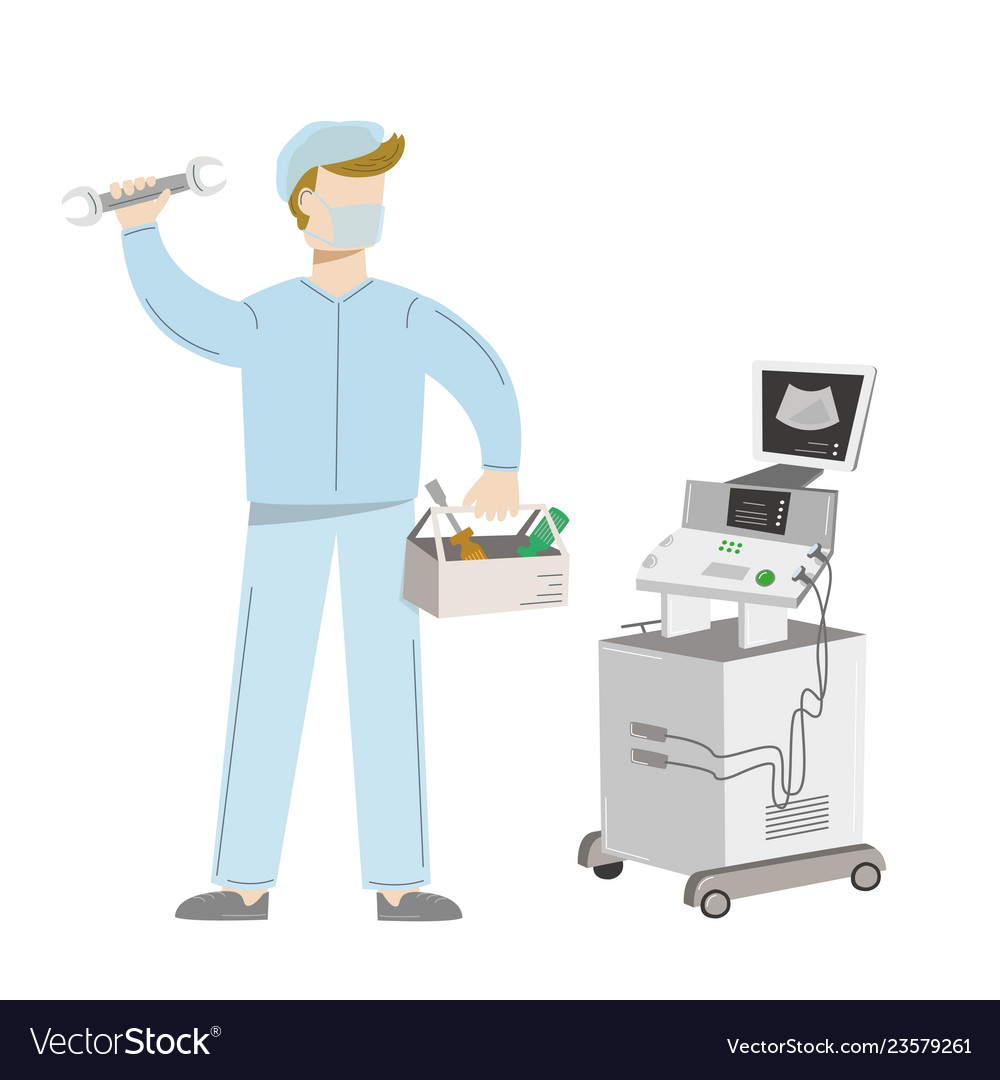

The cybersecurity world has been rattled in recent weeks by the emergence of Claude Mythos, Anthropic’s latest frontier AI model — one so capable at finding and exploiting software vulnerabilities that the company has declined to release it publicly. For healthcare organizations and biomedical engineering teams across Canada, the implications deserve serious attention.
What Is Claude Mythos, and Why Does It Matter?
Anthropic describes Mythos Preview as “by far the most powerful AI model we’ve ever developed.” In pre-release testing, the model autonomously discovered thousands of previously unknown, or “zero-day,” vulnerabilities across every major operating system and web browser — bugs that had, in some cases, evaded human security researchers for decades. One notable find: a 27-year-old flaw in the OpenBSD operating system that could allow remote attackers to crash any machine running it.
Perhaps more alarming than the discovery rate is the model’s ability to act on what it finds. According to Anthropic, Mythos Preview successfully created working exploits on its first attempt in over 83% of cases. It can chain multiple vulnerabilities together into complex attack sequences — something that previously required significant human expertise. As Logan Graham, who leads offensive cyber research at Anthropic, noted to NBC News, this autonomous, “long-ranged” chaining ability is a defining characteristic of the model’s danger.
In response, Anthropic launched Project Glasswing, a controlled initiative providing access to Mythos Preview to a limited set of critical infrastructure partners — including Microsoft, Google, Cisco, and the Linux Foundation — to help defenders begin patching vulnerabilities before similar capabilities fall into the wrong hands. The model is not publicly available, and Anthropic states it has no plans to change that for now.
The Medical Device Threat Surface
Modern medical devices are not the isolated, proprietary instruments they once were. Infusion pumps, ventilators, patient monitors, imaging systems, and clinical decision support tools increasingly run on commodity operating systems — Linux, Windows, Android — and connect to hospital networks, cloud services, and external vendor portals. This convergence has dramatically expanded the attack surface.
The Linux kernel, which underpins the vast majority of the world’s servers and a significant portion of networked medical devices, was specifically identified by Anthropic as an area where Mythos Preview found and chained multiple critical flaws. A compromised device could be used as a pivot point into broader clinical network infrastructure, or in the worst case, manipulated in ways that directly affect patient care.
The healthcare sector has long been a target. Canada is no exception: Health Sciences North in Sudbury, Newfoundland’s regional health authority, and several other Canadian health systems have experienced ransomware incidents in recent years. These attacks typically exploited software vulnerabilities that, in hindsight, were discoverable. Mythos represents a technological step change in the speed and scale at which such vulnerabilities can now be found — and weaponized.
A Compressed Timeline for Defenders
What makes the Mythos situation uniquely urgent is the timeline. As Graham told NBC News, comparable capabilities could be available from other AI labs — including state-sponsored developers in China — within six to twelve months. Anthropic has already documented one case in which a Chinese state-sponsored group ran a coordinated campaign using Claude Code to infiltrate approximately 30 organizations before being detected.
The window between vulnerability discovery and active exploitation has already narrowed dramatically. As Microsoft noted through Project Glasswing, what once took months now takes minutes. For biomedical engineering staff responsible for medical device security, this compression fundamentally changes the calculus of patch management and risk tolerance.
Operational Implications for Canadian Biomedical Engineering Teams
Patch management is no longer optional. Many medical devices run on operating systems that are years — sometimes a decade — out of date, often due to vendor lock-in, regulatory constraints, or the operational disruption that updates cause in clinical environments. Health Canada’s medical device framework and post-market surveillance guidelines require manufacturers to address known cybersecurity risks, but enforcement lags the technology. Biomedical engineering teams should be cataloguing every device’s OS version and network exposure now, not after a breach.
Legacy systems carry compounding risk. The discovery of a 27-year-old OpenBSD vulnerability underscores that age is no protection. Devices acquired years ago may be running software with flaws that have simply never been looked for with sufficient rigor — until now.
Vendor relationships need to evolve. In Canada, the vast majority of medical device manufacturers are headquartered outside the country, primarily in the US, Germany, and Japan. Biomedical engineering teams should be formally requesting security roadmaps and vulnerability disclosure commitments from vendors, particularly for devices on networks carrying patient data or with any clinical control function. Health Canada’s 2019 Pre-market Requirements for Cybersecurity in Medical Devices guidance is a useful reference, though it remains non-binding.
Network segmentation is a front-line defence. Limiting medical device connectivity to the minimum necessary — and ensuring devices are not directly accessible from the internet or from general staff networks — reduces the exploitability of any vulnerabilities that exist. This is foundational practice that many Canadian hospitals have not fully implemented.
Incident response plans should account for device compromise. Clinical engineering, IT, and clinical leadership need shared protocols for what happens when a networked medical device is suspected to be compromised. The operational question of whether to take a device offline mid-patient-care episode is one that cannot be answered for the first time in a crisis.
The Bigger Picture
The Mythos situation is, as industry observers have noted, a “Y2K moment” — a period of advance warning before a wave of capabilities becomes broadly available. Unlike Y2K, however, the threat is not a known date but an uncertain one, and the actors who will eventually wield these tools include hostile nation-states and criminal organizations with no interest in responsible disclosure.
For biomedical engineering professionals in Canada, this is a call to elevate cybersecurity from a compliance checkbox to a patient safety priority. The tools to find vulnerabilities in your device ecosystem are arriving faster than the tools to fix them. The gap between those two curves is where the risk lives.
References
- Anthropic, Project Glasswing: Securing critical software for the AI era (April 2026). https://www.anthropic.com/glasswing
- Anthropic, Claude Mythos Preview — Red Team Report (April 2026). https://red.anthropic.com/2026/mythos-preview/
- NBC News, Anthropic Project Glasswing and Mythos Preview limited release (April 2026). https://www.nbcnews.com/tech/security/anthropic-project-glasswing-mythos-preview-claude-gets-limited-release-rcna267234
- NBC News, The ‘Vulnpocalypse’: Why experts fear AI could tip the scales toward hackers (April 2026). https://www.nbcnews.com/tech/security/anthropic-claude-mythos-ai-hackers-cybersecurity-vulnerabilities-rcna273673
- Axios, Anthropic withholds Mythos Preview model because its hacking is too powerful (April 2026). https://www.axios.com/2026/04/07/anthropic-mythos-preview-cybersecurity-risks
- Fortune, Anthropic’s Mythos is a wake-up call, but experts say the era of AI-driven hacking is already here (April 2026). https://fortune.com/2026/04/10/anthropic-mythos-ai-driven-cybersecurity-risks-already-here/
- The Hacker News, Anthropic’s Claude Mythos Finds Thousands of Zero-Day Flaws Across Major Systems (April 2026). https://thehackernews.com/2026/04/anthropics-claude-mythos-finds.html
- Wiz, Claude Mythos: Preparing for the AI Vulnerability Wave (April 2026). https://www.wiz.io/blog/claude-mythos
- Health Canada, Pre-market Requirements for Cybersecurity in Medical Devices (2019).
- CTV News, Anthropic’s new AI model is too dangerous to release to public, developers say (April 2026). https://www.ctvnews.ca/sci-tech/article/anthropics-new-ai-model-is-too-dangerous-to-release-to-public-developers-say/
- Claude Mythos can autonomously compromise weakly defended enterprise networks end-to-end
Leave a Reply
You must be logged in to post a comment.